























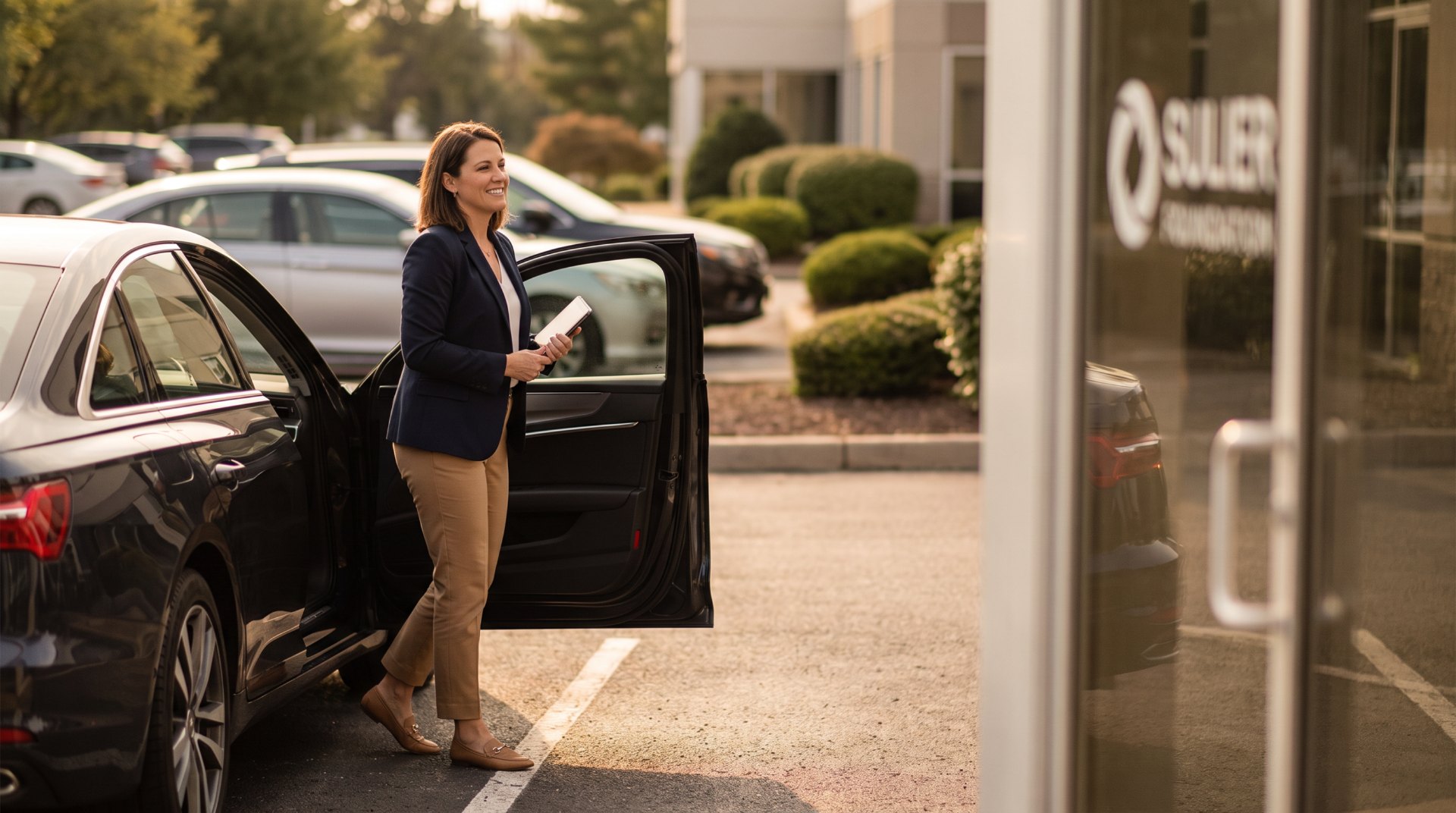
A typical outside-sales rep might spend four to six hours a day in a car. You will almost never see any of it.
That's the uncomfortable truth of leading a field team. The moments you actually witness — a ride-along, a quarterly review, a Monday call — are a thin slice of the job. The real performance happens in the windshield time: the driving, the parking-lot prep, the "do I push for one more stop or head home" decision at 4:45 on a Thursday.
Most sales management advice ignores this completely. It's written for inside teams where the manager can overhear every call. For field leaders, the hard part isn't coaching what you see. It's coaching what you can't.
Why field management breaks the usual playbook
Inside-sales coaching relies on proximity. You listen, you whisper-coach, you pull up the recording. Field sales removes all of that. By the time a rep tells you a deal stalled, the visit happened a week ago, in a town three hours away, with no recording and a fuzzy memory.
This creates three blind spots that quietly drain field teams:
- The motion illusion. A rep who drives 1,200 km a week looks committed. But raw mileage often hides bad routing, not effort. Busy is not the same as productive.
- The lonely-decision problem. Field reps make dozens of small calls a day with no one to bounce them off. Skip the marginal account? Discount to close fast and get home? Those compound.
- The fairness fog. When you can't see the day, you can't see the workload. The rep with the dense urban patch and the rep with 90-minute gaps between farms look identical on a dashboard. They are not doing the same job.
If you only coach the visits, you're optimizing maybe 30% of the role. Here's how to get at the rest.
Coach the route, not just the meeting
Start treating the day as the unit of coaching, not the call.
Pull up a rep's actual week — where they went, in what order, how long between stops. You will spot patterns no CRM note reveals:
- A rep zig-zagging across a territory because they book visits in the order customers reply, not the order that makes geographic sense.
- Three high-value accounts visited at the end of the day, when the rep is tired and rushing.
- A "dead" corridor of the territory that hasn't been touched in two months.
This is where route-aware planning earns its keep. Tools like SalesFleet exist precisely so a rep isn't improvising their week from a spreadsheet and a hunch — but even without software, the coaching move is the same: sit down and look at the geography of the week together. Ask, "Walk me through why you went here, then here." You'll teach better routing in twenty minutes than a year of pipeline reviews.
A practical drill
Once a month, ask each rep to defend their next week's plan in two sentences per day: the goal of the day and the one account that makes it worth the drive. If they can't, the plan is reactive. That conversation alone reshapes how reps think about their time.
Build accountability around outcomes reps control
The fastest way to demotivate a field team is to hold them accountable for things they can't influence — and let slide the things they can.
Reps don't control whether a prospect's budget got frozen. They do control:
- Whether the high-potential accounts in their patch actually get visited at a sensible cadence
- Whether CRM notes get logged the same day, while the detail is fresh
- Whether they prep the meeting or wing it from the parking lot
Make those the accountability metrics. Visit cadence on target accounts is a far better leading indicator than total visits, because it rewards judgment over motion. A rep who makes 15 well-chosen visits should out-rank one who makes 25 scattershot ones.
And be honest about same-day logging. If notes pile up to Friday, your pipeline is fiction by Wednesday. The fix isn't nagging — it's making logging take 30 seconds from the car, not 30 minutes at a desk.
Motivation in isolation
The office gets free motivation: energy, banter, a manager nodding when you close. The field rep gets a quiet car and a long drive home after a no.
You have to manufacture what the office provides for free.
- Make wins visible across the team. A shared channel where a closed deal or a rescued account gets a reaction. It's small. It matters enormously when you're alone in a Skoda outside Lyon.
- Acknowledge the grind, not just the result. "I saw you made it to four stops in that weather, nice push" tells a rep you actually understand their day. Generic "great job team!" tells them you don't.
- Protect the Friday-afternoon decision. That's when isolated reps cut corners. A rep who feels seen and fairly treated makes the extra stop. A resentful one drives home early, and you'll never know.
Motivation for field teams is mostly about reducing loneliness and respecting effort. Comp plans matter, but they're table stakes.
Hire for the car, not the room
Most sales hiring tests how someone performs in the room — charm, objection handling, a polished pitch. For field roles, that's half the picture. The other half is whether they can run an independent operation from a driver's seat with no one watching.
In interviews, probe the unglamorous parts:
- "Walk me through how you planned a typical week in your last role." Vague answers are a red flag. You want someone who thinks in geography and priority.
- "Tell me about a day everything went wrong — cancellation, traffic, a no-show. What did you do with the gap?" You're testing resourcefulness in isolation.
- "How do you decide an account isn't worth another visit?" Field reps who chase every dying deal burn their territory.
Discipline travels well. Charm without discipline strands a great talker in a badly run territory.
Make workload visibly fair
Nothing erodes a field team faster than the suspicion that someone got the easy patch. And in field sales, territory quality varies wildly — drive density, account concentration, traffic, even weather.
Do the unglamorous math. Compare territories on achievable visits per day, not just account count. A patch with 90-minute gaps between customers cannot carry the same target as a dense urban one, even if both have 200 accounts.
Then say so out loud. Reps respect a manager who acknowledges, "Your territory costs you two hours of driving a day, so your visit target reflects that." That single sentence buys more loyalty than a kickoff speech.
The shift that matters
Stop thinking of yourself as the coach of meetings. Start thinking of yourself as the operations leader of a fleet of independent decision-makers, each running their own small business out of a car.
The managers who win in the field aren't the ones with the best whiteboard pitch. They're the ones who got curious about the hours they couldn't see — and built the routing, the accountability, and the fairness to make those hours count.